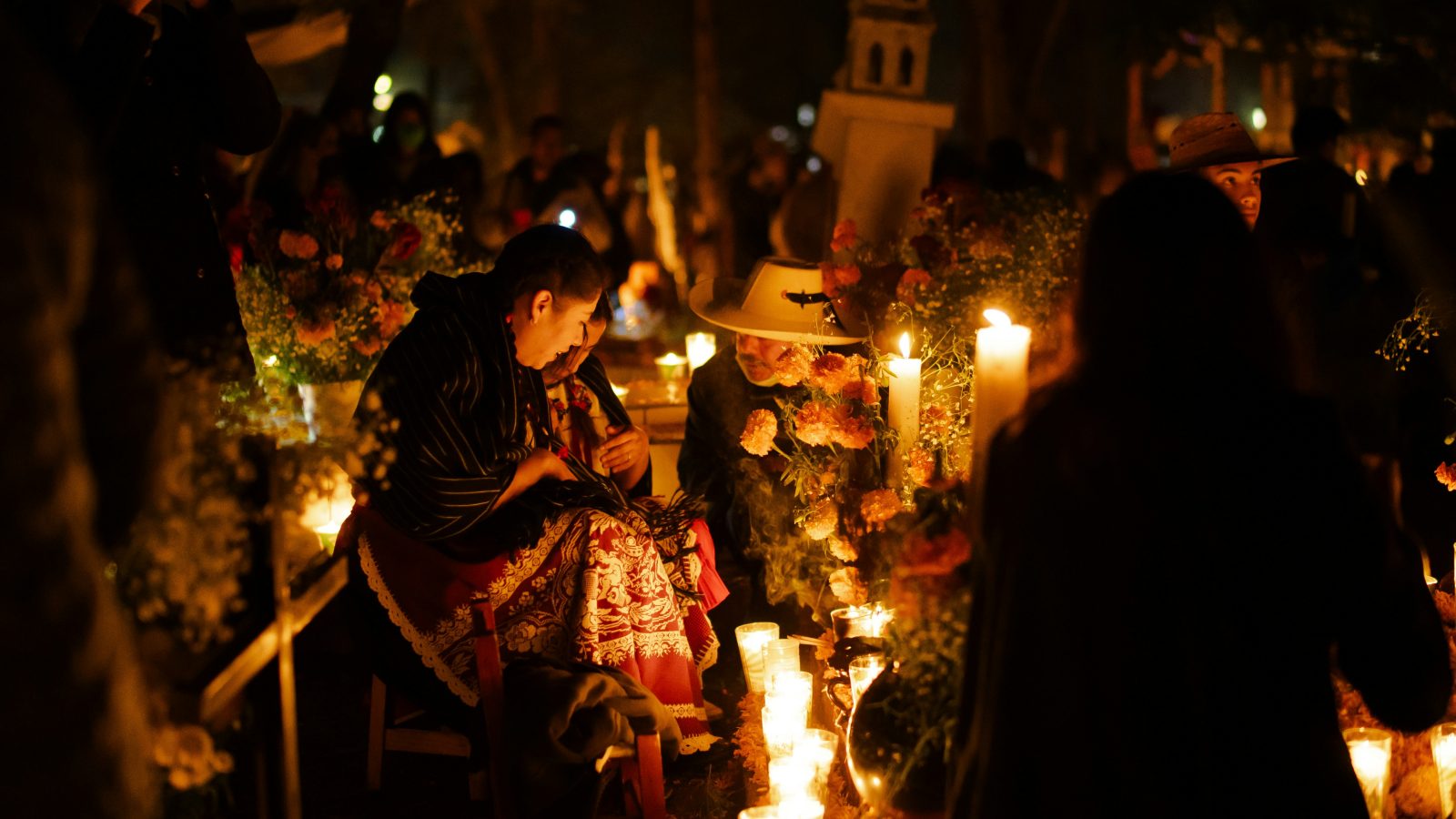
For many families in Mexico, the Day of the Dead is a time to remember those who are gone. But behind every ofrenda there is also a huge economic chain: farmers who plant cempasúchil marigolds from the summer, bakeries working double shifts, markets, hotels and artisans.
In this article I look at how much money the celebration moves, who keeps it, and why such a local tradition carries more and more weight in international trade.
In short
- The 2026 Day of the Dead is estimated to have moved around 53,000 million pesos in Mexico, 7% more than in 2025.
- Close to 450,000 international tourists stayed in Mexican hotels during the celebration.
- The tradition is exported as a cultural brand, but it is also imported: more and more «Mexican» products come from China.
How much money the Day of the Dead moves
According to the Confederation of National Chambers of Commerce, Services and Tourism (CONCANACO SERVYTUR), the 2026 Day of the Dead was expected to generate 53,000 million pesos, around 2,900 million dollars, between 25 October and 2 November. That is nine days moving more money than many month-long retail campaigns.
And the figure keeps growing: 45,318 million pesos in 2024, 49,500 million in 2025 and 53,000 million in 2026. That is 17% more in two years.
Key figures
53,000 M
pesos of economic activity in 2026
+7%
growth compared with 2025
450,000
international tourists in hotels
Sources: CONCANACO SERVYTUR (October 2026) and Mexico’s Ministry of Tourism (Sectur). These are estimates made before the celebration.
Who keeps the money
What makes the Day of the Dead interesting is how widely the spending is spread. It is not captured by one big chain but by thousands of small businesses:
- Farming. Cempasúchil marigolds are planted from June and July. In 2022 Mexico produced 16,307 tonnes on around 2,300 hectares, according to SIAP, the agriculture ministry’s statistics service. Puebla is the main producer, with Atlixco as its best-known hub.
- Bakeries. Pan de muerto, the sweet bread of the season, is one of its star products.
- Markets and neighbourhood shops. Candles, papel picado, sugar skulls, copal incense and everything needed for the ofrenda.
- Restaurants, hotels and transport. Especially in the destinations where the celebration attracts tourism.
Setting up an ofrenda is also getting more expensive. According to the National Alliance of Small Retailers (ANPEC), an average ofrenda cost around 2,480 pesos in 2026, compared with 2,135 a year earlier: 16% more. Pan de muerto went up 19%.
And e-commerce confirms a curious trend: tradition is gaining ground on Halloween. These are Tiendanube’s online sales figures for September to early October 2026, compared with the same period of 2025:
| Product | Online sales | Celebration |
|---|---|---|
| Skulls and catrinas | +85% | Day of the Dead |
| Papel picado | +53% | Day of the Dead |
| Pan de muerto | +27% | Day of the Dead |
| Altar and ofrenda | +24% | Day of the Dead |
| Costumes | −33% | Halloween |
Source: Tiendanube, October 2026.
The international side (1): a magnet for tourism
Mexico’s Ministry of Tourism estimated around 2.7 million visitors and 1.69 million hotel guests for the 2026 celebration, of whom close to 450,000 were international. Expected tourism spending was 15,737 million pesos, with average hotel occupancy of 58.9%.
The main hubs are the Mexico City parade and Mixquic, the comparsas of Oaxaca, the vigils of Janitzio and Tzintzuntzan in Michoacán, the monumental altars of Huaquechula in Puebla and the Xantolo of the Huasteca Potosina. For many foreign travellers, the Day of the Dead is now a reason to travel in itself, just like Holy Week in Seville or Holi in India.
The international side (2): a tradition that is exported
Few local celebrations have become such a recognisable global brand. UNESCO added it to its list of the Intangible Cultural Heritage of Humanity in 2008, and cinema did the rest. The James Bond film Spectre (2015) opened with a Day of the Dead parade in Mexico City that did not exist; after its success, the city created it in 2016 and today it is one of its biggest events. A year later came Pixar’s Coco, which grossed more than 800 million dollars worldwide and brought the ofrenda and cempasúchil into millions of homes.
The Mexico City parade, born from a film, drew more than 1.45 million people in 2025. It is probably the best example of how an image created for the international market became a real event that generates local business.
Even the most recognisable symbol has a communication story behind it. La Catrina was born around 1912 as «La Calavera Garbancera», a satirical print by José Guadalupe Posada mocking Mexicans who rejected their roots to imitate European fashion. It was Diego Rivera who named her Catrina and dressed her in her famous hat in the mural Dream of a Sunday Afternoon in the Alameda Central (1947). A piece of social criticism ended up as a global commercial icon.
That brand value also attracts interest. In May 2013, Disney applied in the United States to register «Día de los Muertos» as a trademark for merchandise from its upcoming film. The reaction in Mexico and in the Latino community was so strong that it withdrew the application just one week later. The film ended up being called Coco, and Pixar hired Mexican cultural consultants to develop it.
For trade, this means demand outside Mexico. Tens of millions of people of Mexican origin live in the United States and keep the tradition alive, and skulls and catrinas have become a common motif in home decor, fashion and consumer products from international brands.
The Day of the Dead is one of the few traditions Mexico exports as a brand. The challenge is making sure the money flows back to Mexico too.
The international side (3): Mexico is the flower’s home, but imports its pigment
Cempasúchil is not just for ofrendas. Its petals yield natural pigments, mainly lutein, which industry uses in feed for chickens and hens: it is what gives chicken skin and egg yolks their deep yellow colour. It is also used in pasta, cured meats and some pharmaceutical products.
Here is the paradox. Mexico is the species’ centre of origin, but it stopped producing these pigments for its poultry industry around the year 2000. According to José Luis Sánchez Millán, a researcher at UNAM, more than 90% of world production is now in China, and Mexico spends at least 36 million dollars a year importing the Chinese pigment, which arrives as oleoresin at the port of Manzanillo. A single Chinese company, Leader Group, grows around 5,000 hectares of cempasúchil in China and another 3,000 in Africa, more than Mexico plants for the whole Day of the Dead.
The good
✓ The ofrenda flower is grown in Mexico and provides farm income.
✓ UNAM is researching varieties with higher yield and more pigment.
Could be better
✕ The industrial business of the flower, the most valuable one, is in Chinese hands.
✕ Every year Mexico imports a product it could make from its own native plant.
It is a textbook international trade case: having the resource is not enough if another country invests in scale, technology and supply chain.
The international side (4): «Made in China» crafts
The flip side of this success is that the tradition is also imported. What started with Chinese-made Halloween costumes and decorations now includes papel picado, catrinas and crafts with Day of the Dead motifs, sold in street markets, traditional markets and platforms such as Temu and AliExpress, often without the buyer knowing where they come from.
In 2024, the Council for the Development of Small Retail (CONCOMERCIO) estimated that half of Halloween and Day of the Dead season sales went to informal retail, and that up to 80% of the products sold through those channels were of Chinese origin. This hits Mexican artisans directly, as they compete with much cheaper replicas.
My tip
If you are a foreign brand looking to join the Day of the Dead in Mexico, do not treat it as a «Mexican Halloween». It is a family, emotional celebration. The campaigns that work are the ones that respect its meaning and partner with local producers and artisans, not the ones that just use a skull as decoration.
Conclusion
The Day of the Dead is much more than a tradition: it is a 53,000-million-peso economic engine that spreads income across farming, small retail and tourism. Internationally, it works in two directions: Mexico exports the tradition as a cultural brand that draws tourists and reaches cinema and global brands, but it also imports more and more products that imitate its symbols, and even the pigment of its own flower. Protecting the origin of what is sold will be key to making sure the value of the tradition stays with the people who keep it alive.
Sources: CONCANACO SERVYTUR (October 2026); Mexico’s Ministry of Tourism (via Mundo Ejecutivo, October 2026); Tiendanube (via NotiPress, October 2026); ANPEC (via Merca2.0); SIAP and Ministry of Agriculture (via Forbes México); CONCOMERCIO (via El CEO, October 2024); UNAM and Inecol (via UnoTV, October 2026); CBS News (May 2013).