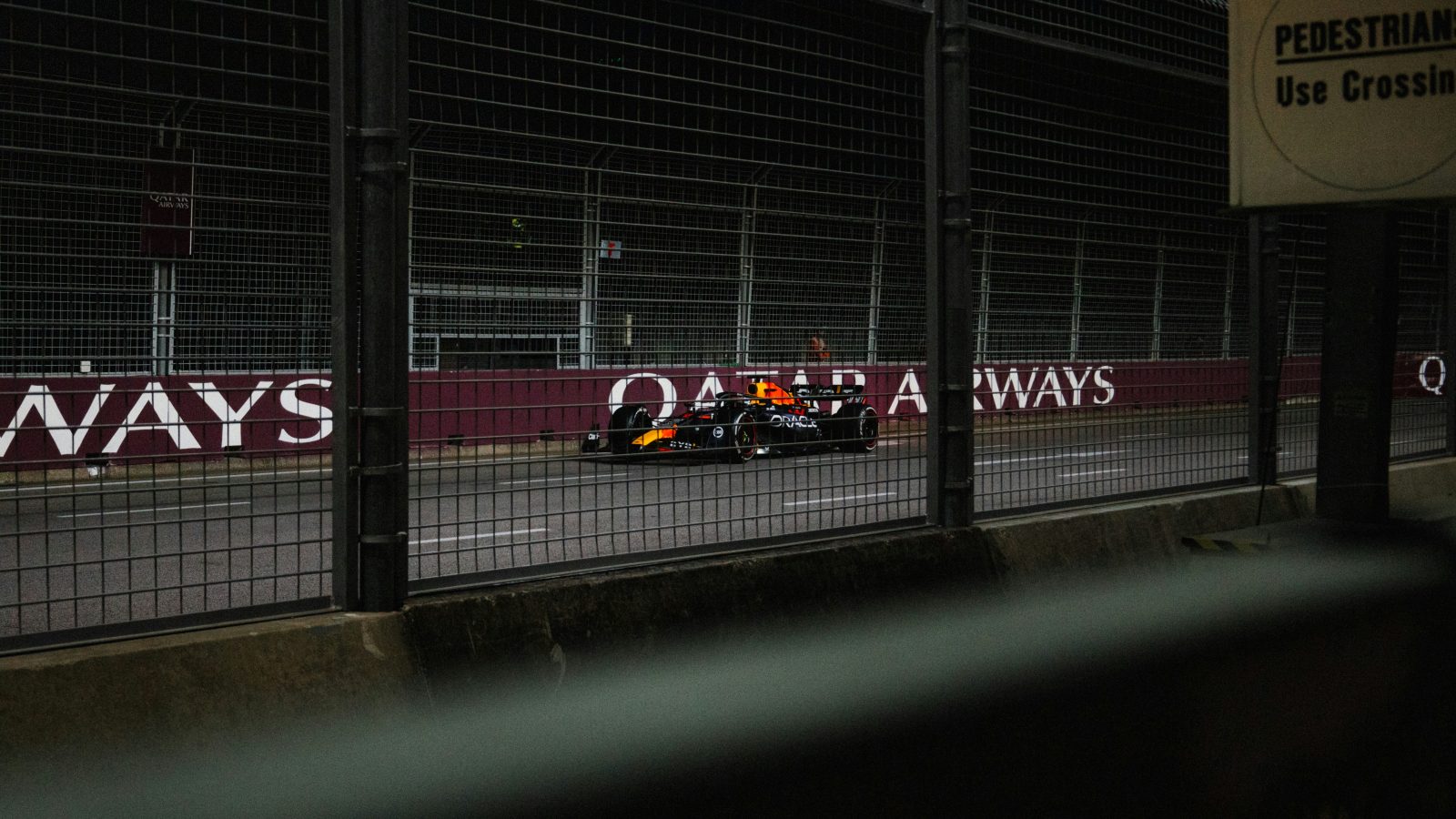
Every autumn, for one weekend, Mexico City becomes the centre of world motorsport. The Mexico City Grand Prix fills the Autódromo Hermanos Rodríguez, the streets, the hotels and the restaurants. But behind the show there is something I find just as fascinating: a huge foreign trade operation that almost nobody sees.
In this article I look at how much the 2026 edition brought in, who keeps that money, and I answer a question I was asked recently: if the teams bring cars, engines and entire garages from abroad, does that count as an import? Do they pay taxes?
In short
- The 2026 Grand Prix drew 405,363 people over three days, a record according to the organisers.
- Canaco CDMX, Mexico City’s chamber of commerce, estimated more than 22,000 million pesos in economic activity.
- The teams’ equipment is an import, but a temporary one: it pays no duties because it has to leave the country exactly as it came in.
A record weekend
The 2026 edition took place from 30 October to 1 November. Max Verstappen won in Mexico for the sixth time, ahead of Lewis Hamilton, and Kimi Antonelli finished third and secured the drivers’ title. For local fans it was bittersweet: Sergio «Checo» Pérez started his 300th Grand Prix and finished 17th.
In the stands, the figures were historic. According to official attendance data, 102,122 people came on Friday for practice, 147,889 on Saturday for qualifying and 155,352 on Sunday for the race: 405,363 in total.
Key figures
405,363
attendees over the three days
22,228 M
pesos of estimated economic activity
85–95%
expected hotel occupancy
Sources: official Grand Prix attendance; economic activity and occupancy are advance estimates by Mexico City’s National Chamber of Commerce, Services and Tourism (Canaco CDMX).
Who keeps the money
Before the race, Canaco CDMX estimated economic activity of 22,228 million pesos, around 1,200 million dollars, 6.5% more than the estimate for 2025. This is how the items the chamber detailed break down:
| Item | Million pesos |
|---|---|
| Ticket sales | 8,420 |
| Tour guides, travel agencies and transfers | 4,518 |
| Hotels | 367 |
| Media coverage and international advertising | 9 |
| Restaurants, bars, retail, transport and other (not broken down) | ≈ 8,900 |
Source: Canaco CDMX (via Forbes México, October 2026). The last row is my own calculation: what is left of the total after the detailed items.
Two things stand out to me. First, tickets are the biggest item, which says a lot about the price of an experience now sold as a premium product. Second, almost 9,000 million is spread across restaurants, bars, shops, taxis, ride-hailing apps, museums and crafts. In other words, the effect does not stay at the track: it reaches the whole city.
One important caveat: these are estimates made before the event, and the comparison with 2025 varies by source. Even so, the order of magnitude makes it clear that F1 is one of the events with the greatest economic impact on Mexico’s calendar.
The circus that travels the world
To understand the foreign trade side, you first need a sense of what moves. According to DHL, Formula 1’s official logistics partner, the championship had 24 races in 21 countries in 2025 and moved up to 1,200 tonnes of equipment per event.
- By air goes everything critical: cars, engines and the broadcast equipment. For long-haul races around five Boeing 777 freighters are used.
- By sea goes the heavy, less urgent material. Each team has five or six identical sets of garage equipment rotating around the world months in advance.
- By road goes almost everything in Europe: up to 400 trucks.
Mexico also has a special challenge: it is usually held right before or after Austin (United States). DHL cites that pair of races as an example of how air, sea and road have to be combined to overcome customs complexity and border controls.
Does it count as an import? Yes, but a temporary one
This is the key question. The short answer: yes, all that equipment enters Mexico as an import, but under a temporary import regime. The difference from a normal import is not whether it goes through customs, but what it enters for and whether it stays.
When a company imports a product to sell it or use it permanently, it makes a definitive import: it pays the tariff (Mexico’s General Import Tax) and 16% VAT. But when goods enter for a specific purpose and must leave the country in the same condition, the law allows a temporary import. As long as the deadline and conditions are met, the tariff is not paid: the tax is not waived, it is suspended.
Formula 1 does not enter Mexico without going through customs. It enters with a return ticket.
In Mexico there are two usual routes for this kind of equipment:
| Item | Definitive import | Temporary import (Customs Law, art. 106) | ATA Carnet |
|---|---|---|---|
| What it is for | Products sold or kept in Mexico | Goods that leave again unchanged: conventions, cultural or sporting events, among others | Professional equipment, commercial samples and trade fair material |
| Duties | Paid, plus 16% VAT | No tariff is paid while the deadline is met | No duties or border taxes |
| Time limit | None | Up to one year for events | Up to 12 months |
| Guarantee | — | If it does not leave on time, it is considered illegally in the country | International chamber of commerce network; in Mexico, Canaco CDMX since 2011 |
The ATA Carnet is a kind of «passport for goods». It is issued by a chamber of commerce in the country of origin, which guarantees to other countries’ customs that taxes will be paid if the goods do not leave. That way, equipment can enter and leave several countries for a year with a single document. F1 logistics uses it in many destinations: after Brexit, for example, DHL had to arrange ATA carnets so teams’ equipment could keep moving duty-free between the United Kingdom and the European Union. Mexico has been part of the ATA system since 2011.
And what if something does not leave? If a car, a part or a piece of equipment is sold or stays in Mexico, it is no longer temporary: the taxes of a definitive import must be paid, and if it is not regularised, the law considers the goods to be illegally in the country, with the corresponding fines. With an ATA Carnet, the guaranteeing chamber is liable for that payment.
What does pay taxes
The rule has a simple logic: what leaves again does not pay; what stays does. So even though cars and garages enter temporarily, everything sold or consumed in Mexico follows the normal rules. Official merchandise sold at the track, food and drink, and sponsors’ products that stay in the country have to be imported definitively or bought in Mexico, with the corresponding VAT.
And here lies an opportunity for the local economy: every product or service bought in Mexico instead of brought from abroad (catering, transport, set-up, security, printing) adds to the economic activity we talked about.
My tip
If your company travels to international trade fairs with samples or equipment, look into the ATA Carnet. It is the same tool Formula 1 uses, it is available to any company through chambers of commerce, and it saves you paying duties and guarantees at every border.
Conclusion
The Mexico City Grand Prix is much more than a race: more than 400,000 attendees and estimated economic activity of more than 22,000 million pesos that reaches hotels, restaurants, agencies and small businesses. It is also a live lesson in foreign trade. The tonnes of equipment that arrive every year are an import, but a temporary one: they come in with the promise of leaving unchanged, which is why they pay no duties. What stays, on the other hand, pays like any other product. Rarely do you see so clearly how customs and international agreements make a global show possible.
Sources: 2026 Grand Prix attendance and results (Grupo Animal, November 2026); Canaco CDMX (via Forbes México, October 2026); DHL (2025); FreightWaves (2022); Mexican Customs Law, article 106; ATA Carnet system in Mexico; US International Trade Administration (2026).